


Trade Hounds
3.9193.00 Reviews
App Specs
- Version
- 5.2.0
- Updated On
- License
- Free
- Downloads
- 100,000+
- Developer
- Material Management Software, LLC
- Categories
- Social
- Platform
- Android
Screenshots
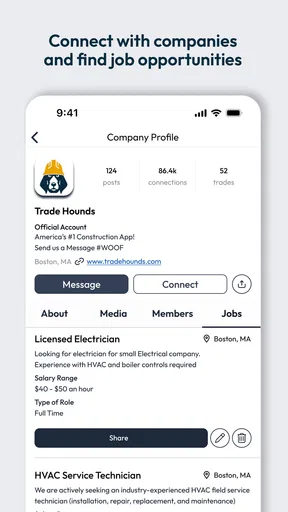
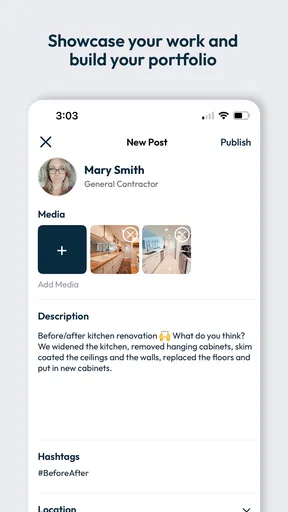
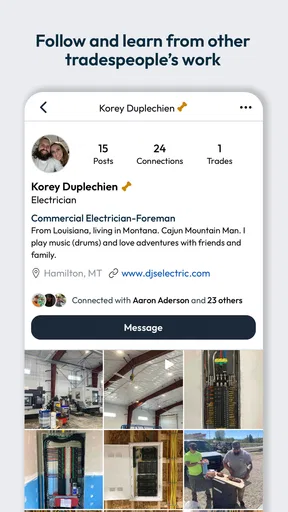
 Analysis by AppCompare
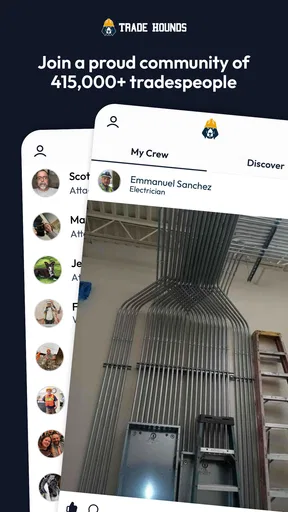
When I first looked at Trade Hounds, I did not see it as another general-purpose social network. Its focus is much narrower and more practical: it is a social app built around construction workers and the conversations that happen around the trade. That distinction matters. If your daily life involves jobsites, tools, crews, apprentices, contractors, or the constant search for useful advice from people who have actually done the work, a focused community can be more valuable than a huge platform full of unrelated posts.
The app is free, belongs to the social category, and is developed by Material Management Software, LLC. Its store summary describes it as a community for construction, while its short description simply identifies it as Trade Hounds. That simplicity is revealing: the appeal is not a complicated productivity system or an entertainment feed. The appeal is having a place where construction-related discussion is the main reason people are there.
My overall view is positive, but conditional. I would recommend it to someone who wants trade-centered conversation and is willing to participate rather than only browse. I would not treat it as a replacement for a formal training program, a project-management tool, or a broad professional network. The best decision depends on what you want from a social app and how much value you place on a community that speaks your working language.
How I Would Decide Whether Trade Hounds Fits
I would judge Trade Hounds by whether its conversations help me think more clearly about the work, not by how busy the feed looks. The sections ahead weigh the practical value of a focused community against the time and care it asks from its members. That distinction is useful before deciding whether to make room for another social app.
Start with the kind of connection you actually need
The first question is not whether the app has a large audience. It is whether your questions and interests are specific enough to benefit from a construction-focused space. Someone wondering how other workers handle a difficult site situation, choose between approaches, or move through a trade career may get more useful conversation here than on a general social platform. A broad network can expose you to more people, but it also makes trade discussion compete with everything else.
I would also separate three different goals: learning, networking, and entertainment. Trade Hounds makes the most sense when at least one of the first two is important. If you mainly want polished short videos, celebrity content, or an endless stream of unrelated recommendations, a mainstream social app will probably feel more immediately rewarding. If you want to feel connected to people whose work resembles yours, the narrower audience is an advantage rather than a limitation.
There is another practical question: are you comfortable contributing details from your own experience? Communities like this become useful when members share techniques, explain mistakes, compare jobsite realities, and ask direct questions. A passive user can still browse, but the strongest value usually comes from knowing how to describe a problem clearly and recognizing which replies are based on real experience rather than confident guessing.
Worth Reading Before You Choose

EA SPORTS FC Mobile 26 Is a Bigger Football Game, but It Takes Time

Flipboard Shows What News Apps Must Do Beyond the Feed

Switching to Android Auto Means Rethinking Your Driving Routine

Google Calendar Makes a Crowded Week Easier to Manage

Ludo King Makes the Most of the Minutes Between Plans

Baby Panda World Brings Quick Play to Modern Phones, but Its Game Library Feels Busy
Think about privacy before posting from the jobsite
Construction work often involves employers, clients, addresses, schedules, safety procedures, and unfinished projects. I would avoid posting identifiable photos or naming a workplace unless I had permission. Even a harmless-looking image can reveal more than intended through a company logo, street sign, vehicle marking, or visible paperwork. That is not a reason to avoid the app; it is a reason to treat a trade community with the same care you would use anywhere online.
A useful habit is to describe the situation without exposing the people involved. Instead of posting a recognizable project image, explain the material, the stage of work, and the problem in words. This can produce better discussion anyway, because it encourages replies about the actual issue rather than comments about the picture. I see this as one of the most important ways to use a construction-focused social app responsibly.
What the public reception suggests
Trade Hounds has an average rating of 3.9 from around 429 ratings, with around 193 written reviews. It has also passed 100K installs, which indicates that it has reached a meaningful group of users without suggesting that it is as universal as the biggest social platforms. I read those figures as a sign of a real but specialized community: enough activity to make the concept worthwhile, while still small enough that the experience may depend heavily on when and how you participate.
The app is rated Teen, so parents and younger users should consider that construction discussion and social interaction may not be designed for children. It was released on December 3, 2018, and the current version is 5.2.0. The minimum operating-system requirement is version 10, which is worth checking before installing, especially if you keep an older phone for work or use a device with limited software support.
Where the Focused Community Has an Edge
The focused audience matters most when a question depends on the realities of construction rather than general social advice. I would look for replies that explain their reasoning and acknowledge when conditions can change the answer, since that is a better sign of useful peer exchange than confidence alone. This is where the app’s narrower purpose can make participation feel more relevant.
Trade language makes questions easier to understand
The strongest advantage is context. On a general network, a construction question may be surrounded by people who have no reason to understand the terminology, constraints, or consequences involved. In a focused community, the starting point is different. Members are more likely to recognize why a task is difficult, why a shortcut may be unsafe, or why a small difference in material and site conditions changes the answer.
That does not make every response correct, and I would never treat a social post as a substitute for local regulations, manufacturer instructions, or qualified supervision. Still, the chance of receiving a relevant perspective is higher when the community is organized around the same broad working world. The app’s identity gives a question a better chance of reaching people who understand its practical context.
A realistic use case: preparing for the next shift
Imagine finishing a shift with a problem you could not fully solve. You remember the symptoms, the tools involved, and the point where your usual approach stopped working, but you do not want to wait until the next day to ask around. In Trade Hounds, you could write a concise description, remove identifying details, and compare the responses with what your supervisor or official documentation says.
The value here is not instant certainty. It is preparation. You may discover a term for the problem, learn which details matter, or arrive at work with better questions. That makes the app useful between shifts rather than only during idle scrolling. I especially like this kind of workflow because it turns social participation into a small form of professional reflection: document what happened, ask clearly, and use the replies to guide further checking.
It can help newer workers feel less isolated
People entering a trade may hesitate to ask basic questions in front of a crew. A construction-specific community can lower that barrier, at least emotionally. Reading how experienced workers discuss mistakes, tools, expectations, and career decisions may help a newcomer understand that uncertainty is normal and that practical knowledge often comes from repeated situations rather than a single lesson.
My advice for a beginner would be to use the app as a supplement to hands-on instruction. Ask questions, compare explanations, and keep notes on terms you want to research, but do not copy a risky method simply because a confident user recommends it. The app can help you find the shape of a question; it cannot see your entire worksite or take responsibility for the result.
The social value is more specific than a résumé network
Trade Hounds may also suit workers who want professional connection without the polished tone common on career-oriented networks. A résumé platform is useful for presenting qualifications, following companies, and managing a formal professional identity. A trade community can be better for informal conversation about what the work actually feels like, what people are learning, and which challenges appear repeatedly.
That difference is important when choosing between alternatives. If your goal is to display credentials or contact recruiters, a career network may be the better primary tool. If your goal is to talk with people around the construction world in a less formal setting, this app has a clearer reason to exist.
Small communities reward deliberate participation
One non-obvious strength of a specialized app is that your contribution can carry more context. On a huge network, a useful comment can disappear beneath unrelated content. In a focused space, a well-explained answer may remain relevant to others facing a similar task. I would make posts searchable in spirit even when I am writing casually: describe the situation, mention the relevant trade or material, and separate what I know from what I am asking.
This approach also improves the quality of replies. A vague post invites vague advice. A short but structured question gives experienced users something concrete to respond to. I would include the goal, the obstacle, and what has already been tried, while leaving out private job details. That is a simple workflow, but it is more effective than treating the app as a place to drop a photo and wait for reactions.
Free access lowers the trial barrier
Because the app is free, trying it does not require a subscription decision before you know whether the community suits you. That makes experimentation reasonable: install it, observe the tone, search for subjects relevant to your work, and decide whether the conversations justify keeping it. Free access is particularly helpful for apprentices, independent workers, or anyone who wants a specialized community without adding another regular expense.
Still, “free” does not mean costless in the broader sense. Social apps ask for attention. If the feed becomes a habit that replaces useful study, rest, or direct conversations with coworkers, the value can turn negative. I would judge it by whether it helps me solve problems, learn vocabulary, or connect with people—not by how long it keeps me scrolling.
Where Another Option May Serve You Better
A specialized community is not automatically the best tool for every construction-related need. I would choose another option when I need verified technical instruction, urgent workplace coordination, broad public reach, or a direct route to a service; those tasks call for different kinds of reliability and organization. The next section considers those limits without treating them as flaws in the app’s core idea.
Do not confuse community advice with formal technical authority
The biggest limitation is shared by nearly every social platform: user discussion varies in quality. Construction advice can be especially sensitive because the correct approach may depend on local codes, site conditions, equipment, training, and the exact materials involved. A reply that worked for one person may be wrong for another situation.
For safety-critical decisions, I would use Trade Hounds to gather perspectives and terminology, then verify the answer through a supervisor, official documentation, or an appropriate professional source. If you want a structured curriculum, assessments, or a clear progression from beginner to advanced topics, an education platform is a better fit. This app is conversational; it is not a replacement for organized instruction.
General social networks still win on reach
A broad platform may be preferable when you need to contact friends and family, follow local businesses, join unrelated interest groups, or reach the largest possible audience. Trade Hounds’ focus is its point, but that same focus means it should not be your only social tool if your needs are wide-ranging.
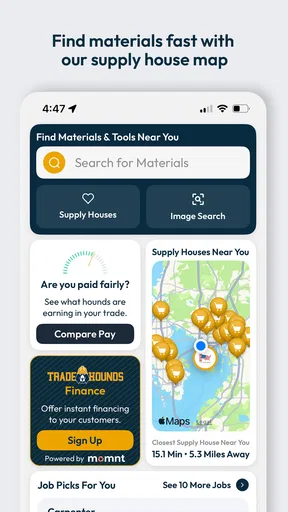
There is also a difference between discovering a community and finding a specific local service. If you need a contractor, supplier, classified listing, or nearby job opportunity, a dedicated marketplace or employment service may produce a more direct result. I would not install this app expecting it to replace every construction-related online resource. Its value is conversation and community, not a universal directory.
Content style may influence your decision
Some users prefer social apps that are highly visual, fast, and entertainment-driven. Others prefer long explanations and carefully organized reference material. A trade community can sit somewhere in between, but your enjoyment will depend on whether you like learning through informal exchanges. If you become frustrated by repeated questions, strong opinions, or uneven explanations, a curated technical resource may be less tiring.
On the other hand, overly polished resources can hide the messy reality of work. A real worker’s account may reveal a practical constraint that a textbook example overlooks. That is where I see the trade-off: Trade Hounds can feel more grounded than formal material, while formal material is usually easier to verify and follow systematically.
Switching requires rebuilding your personal rhythm
Moving from a general network to a specialized community is not only an installation decision. You have to learn the local tone, find subjects worth following, and decide how much personal experience to share. At first, the feed may feel less immediately busy than a mainstream app because it is not trying to cover every interest. I would give it a fair trial based on the quality of relevant conversations rather than the volume of notifications.
There is also a social cost to dividing attention between several platforms. If your coworkers already use another channel for urgent coordination, do not move essential work communication into a social app simply because it is convenient. Use the right tool for the task: direct workplace channels for time-sensitive instructions, formal systems for records, and Trade Hounds for broader discussion and peer connection.
How I would test it without wasting time
I would begin by spending a short period observing before posting. Look for whether discussions match your trade interests, whether replies explain their reasoning, and whether the tone feels respectful enough for questions from less experienced workers. Then I would make one useful, low-risk post rather than several personal updates. A question about terminology, workflow, or general experience is safer than sharing identifiable project information.
After that, I would judge the app by outcomes. Did I learn a term I could research? Did I find a perspective that helped me ask a better question at work? Did I meet people whose experience is relevant? If the answer is consistently no, there is little reason to force the habit. A specialized app should earn its place through relevance, not loyalty.
My Recommendation After Weighing the Trade-Offs
My recommendation depends on a simple test: does participating leave me better prepared to learn, ask, or connect than I was before opening the app? I would give it a fair try, share thoughtfully, and keep formal guidance close for consequential decisions. The final verdict brings that practical standard together into a clear audience recommendation.
Who should install it
I recommend Trade Hounds to construction workers, apprentices, and trade-minded users who want a dedicated social space rather than another general feed. It is particularly appealing if you enjoy comparing real experiences, asking practical questions, and learning from people who understand the environment behind the work. The free price makes it easy to evaluate, and the established install base suggests that you are not entering an entirely empty experiment.
I would also recommend it to experienced workers who are willing to explain their reasoning. The best communities need members who can say not only what they do, but why they do it, when the approach changes, and where a beginner should seek formal guidance. A thoughtful answer can be more valuable than a quick opinion, especially when someone is trying to build safe habits.
Who should skip it or keep it secondary
I would skip it if you want a formal learning path, guaranteed technical accuracy, or a tool for managing jobs and teams. I would also keep it secondary if your main purpose is recruiting, selling services, or finding local listings. Those needs belong to more specialized alternatives.
People who dislike public discussion may find the social format uncomfortable, even when they have useful experience to share. Likewise, anyone looking for a broad entertainment feed may consider the construction focus too narrow. The app is not trying to be everything, and its usefulness falls quickly when your interests have little connection to the trades.
My practical rules for getting value from it
- Ask with context: explain the general situation, the obstacle, and what you have already checked, while removing private jobsite details.
- Verify high-stakes advice: use replies as leads for further checking, never as automatic authorization for unsafe work.
- Save useful language: note unfamiliar trade terms so you can research them later or ask a supervisor a more precise question.
- Contribute selectively: share lessons that can help others without exposing employers, clients, coworkers, or project locations.
- Measure usefulness: keep the app if it improves your knowledge or professional connections, not merely because it supplies another stream of notifications.
The cost of switching is manageable, but expectations matter
Since there is no purchase barrier, the main cost of switching is time: learning the community, filtering discussions, and deciding what deserves your attention. That cost is worthwhile when you want a construction-centered conversation that general social networks cannot provide. It is not worthwhile if you expect the app to deliver formal credentials, instant expert answers, or every service connected to the industry.
My final recommendation is to try it as a focused supplement, not as your entire online work life. Trade Hounds is at its best when it turns everyday trade experience into useful peer conversation. Keep official guidance, workplace communication, and structured education in their proper places, then use this app for the human side of the industry: asking, comparing, learning, and realizing that other workers face many of the same problems.
For the right user, that focused identity is more valuable than a larger but less relevant audience. For everyone else, a general social network, technical learning service, career platform, or workplace tool may be the smarter choice. I would install it, explore it carefully, and keep it only if the construction-specific discussions make my working day better informed.
Pros
- Built-in trade community helps connect workers with relevant industry peers.
- Job posts can target skilled trades instead of a broad general audience.
- Useful for discovering tools
- workwear
- and trade-related recommendations.
- Profiles can showcase experience and professional interests.
- Mobile-first design makes browsing posts convenient on job sites.
Cons
- Content quality depends heavily on activity in your local trade community.
- Some posts may feel promotional rather than genuinely informative.
- Job listings may vary in detail
- pay transparency
- and reliability.
- The app can become distracting with frequent social-feed notifications.
- Privacy settings should be reviewed before sharing workplace details or photos.
FAQs for Trade Hounds
What is Trade Hounds, and who is it designed for?
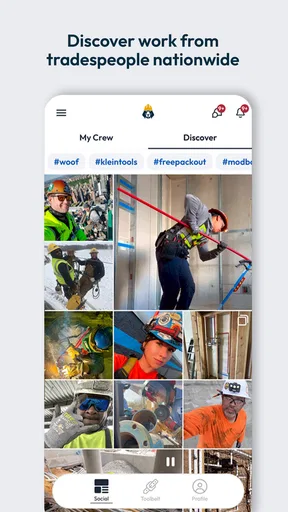
Trade Hounds is a social networking and career platform created primarily for skilled-trade professionals, including electricians, plumbers, carpenters, welders, mechanics, and construction workers. The app lets users share jobsite experiences, connect with other tradespeople, discover employment opportunities, and follow industry-related discussions. It is most useful for people who want professional networking combined with a community focused on hands-on careers.
Can Trade Hounds help me find a job or new career opportunities?
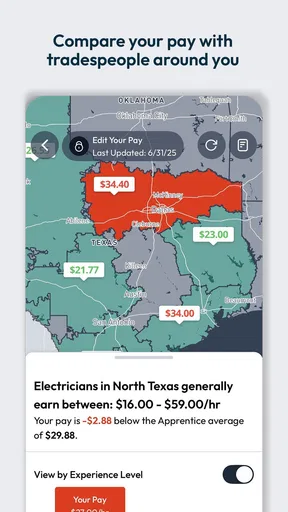
Yes, Trade Hounds can be used to explore employment opportunities in the skilled-trades sector. Depending on your location and the current listings, you may find job posts, recruiting information, or companies looking for qualified workers. The app can also help you build useful connections and learn about employers, but you should still verify job details, pay, location, and company legitimacy before applying or accepting an offer.
Is Trade Hounds free to download and use?
Trade Hounds is generally available as a free download, allowing users to create an account, browse community content, participate in discussions, and explore many of its networking features without an upfront payment. However, specific recruiting services, promotional features, or third-party opportunities may work differently. Before using the app extensively, check the current App Store or Google Play listing for updated pricing, subscriptions, or optional purchases.
What information do I need to create a Trade Hounds account?
Account requirements may vary depending on the version of the app and the features you want to use, but users can generally expect to provide basic details such as a name, email address, phone number, location, or information about their trade experience. A complete profile can improve networking and job-search results. Avoid posting sensitive personal information publicly, and review the app’s privacy settings before sharing workplace details or photographs.
Is Trade Hounds safe for sharing jobsite photos and professional information?
Trade Hounds includes a community environment where users can share jobsite photos, opinions, career experiences, and trade-related content, but you should use the same caution as on any social platform. Do not reveal confidential employer information, private customer details, access codes, or images that could create workplace or legal problems. Review posts before publishing, use available reporting tools for inappropriate behavior, and remember that public content may be visible to employers or other users.


